

What makes Leon Software perfect for compliant crew planning
Every operator knows the pressure of the question: can this crew member legally fly this duty? The answer depends on a web of overlapping parameters — licences, medical certificates, type ratings, recent experience, airport authorisations, and hours accumulated over the past days, weeks, and months. In many operations, answering it still relies on a scheduler's memory, a spreadsheet, or a last-minute call to the training department. Leon is built to answer that question automatically, before any assignment is confirmed.
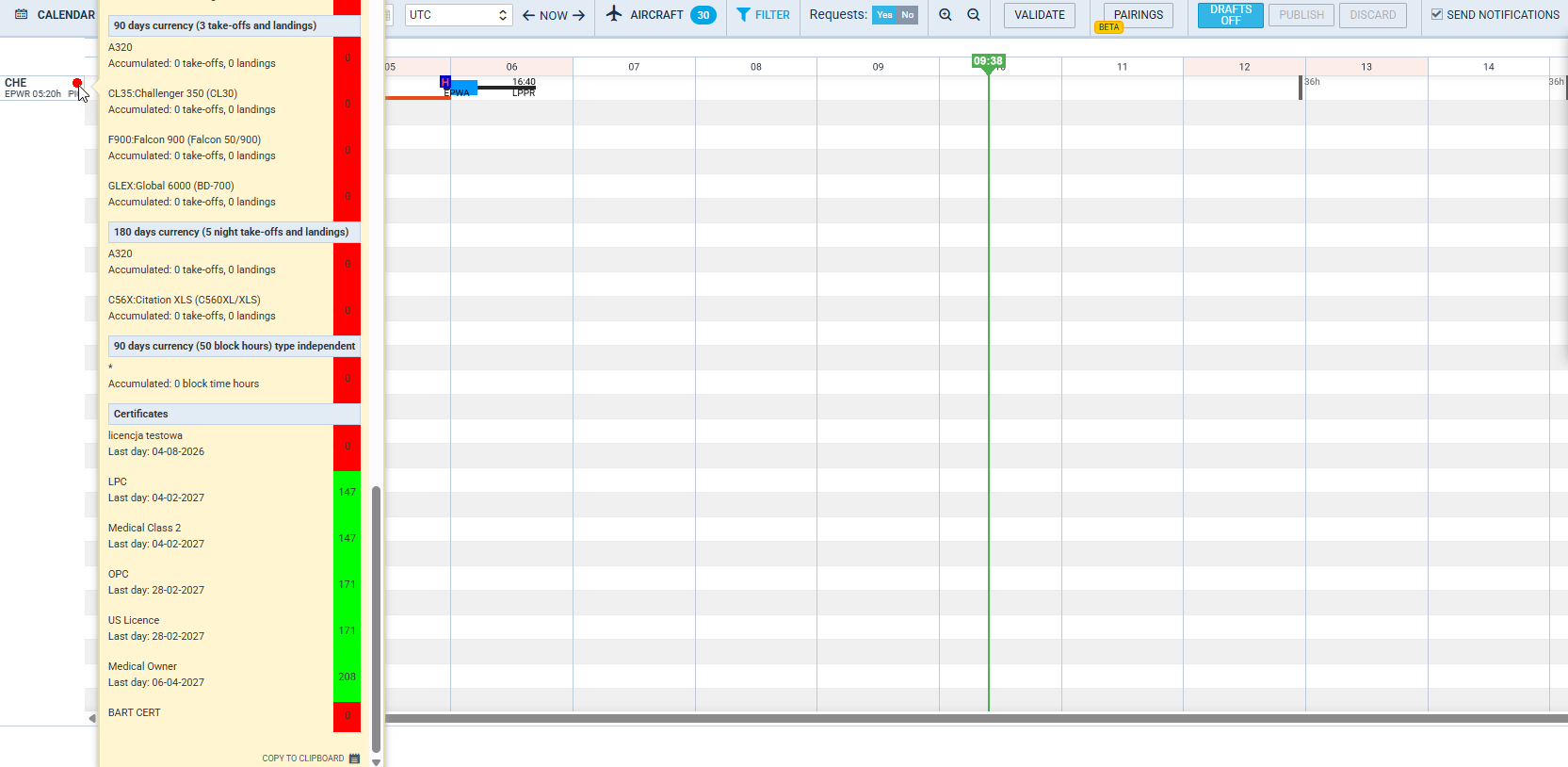
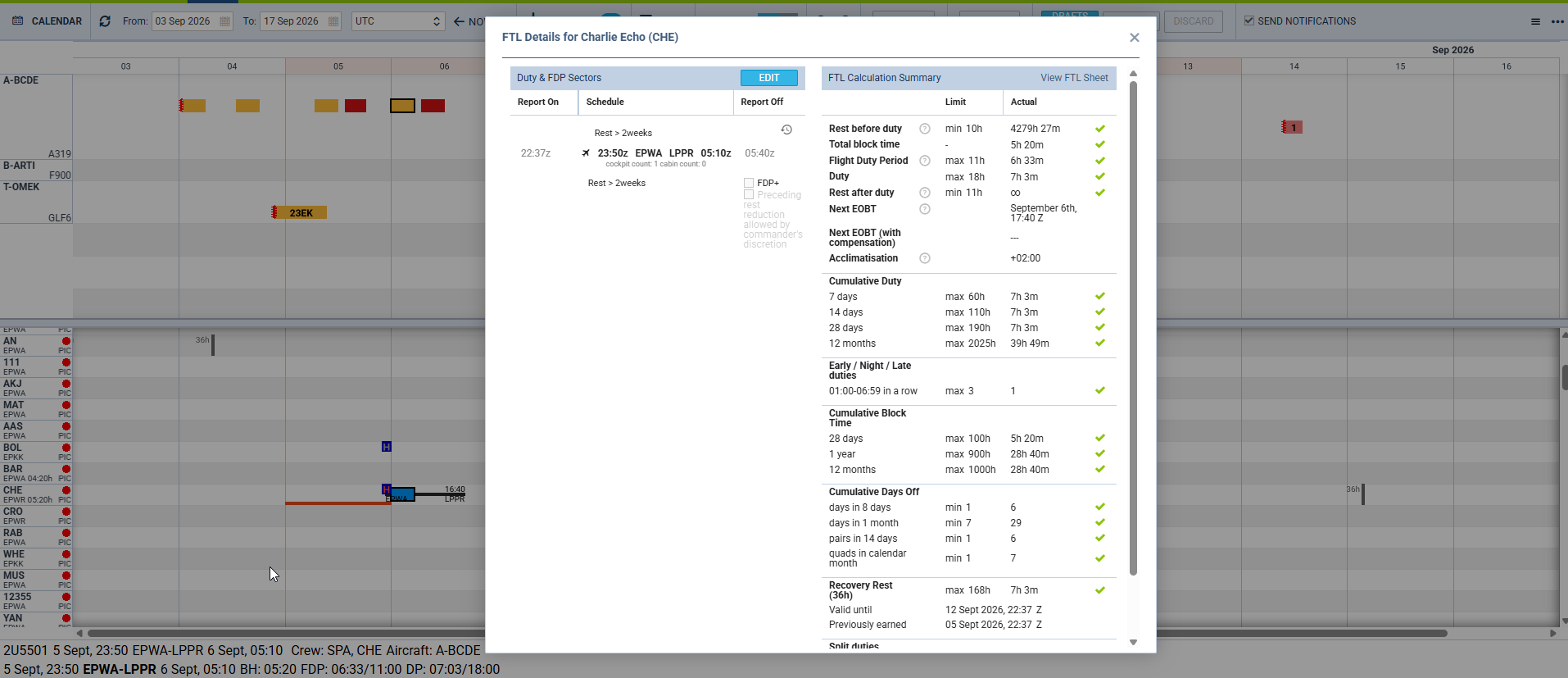
When a crew member is considered for a duty in Leon, the system simultaneously evaluates every compliance-relevant parameter against that individual's current record. Certificates are checked for validity. Airport qualifications are verified against the departure and destination aerodromes. Recent experience is calculated against the applicable currency window. And Flight Time Limitation counters — accumulated duty, flight time, and the rest taken since the last off-duty period — are computed in real time under the specific regulatory framework the operator has configured. If any single parameter would make the assignment non-compliant, the system raises an alert before the duty is saved. The scheduler never has to trust their own recall. They see the full compliance picture at the point of planning, not after the fact.
This matters because the cost of getting it wrong is not merely administrative. A crew member operating without a current certificate, into an airport they are not qualified for, or in breach of rest requirements, creates a legal exposure for the operator and — more importantly — a safety risk for the flight. The value Leon delivers is not simply efficiency in scheduling; it is confidence that every duty published on the roster is one the crew member can lawfully and safely perform.
Equally important is what Leon enables at the planning stage: not just identifying when a crew member cannot be assigned, but helping the scheduler understand who should be assigned. Operators can filter and compare available crew by compliance status, remaining FTL allowances, upcoming certificate renewals, and qualification profiles — making informed decisions that protect both the legality of the operation and the long-term availability of crew resources. Planning with visibility of who is closest to a currency lapse, or who has the most rest buffer for a demanding rotation, is a different — and far more effective — kind of crew management.
Crew Qualifications monitoring
The reliability of these checks depends entirely on the accuracy of the underlying data. Leon addresses this through direct integrations with the leading crew compliance platforms: Centrik, Scandlearn, and Universal Aviation Training synchronise certificate and training records automatically, so the data Leon checks against is always current — not a manually updated copy that may already be out of date. There is no dual entry, no reconciliation effort, and no window in which a recently lapsed certificate might go unnoticed.
Crew Flight Time and Fatigue Management
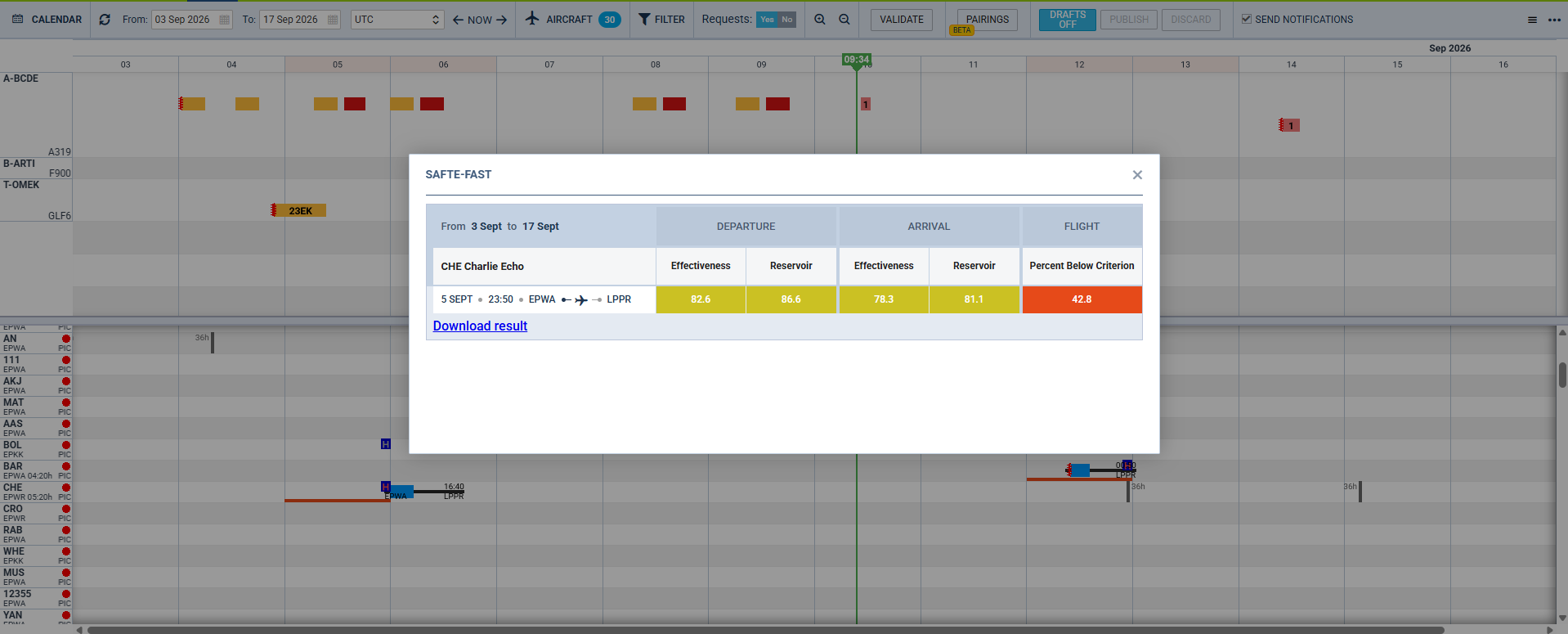
On the FTL side, Leon supports a wide range of regulatory frameworks — including EASA ORO.FTL, CAP 371, Australian CASA Appendices 2–6, and Subpart Q — and can run multiple rule sets in parallel for operators whose crew hold licences under different national authorities. For those with approved Fatigue Risk Management Systems, Leon integrates with SAFTE-FAST and FRMSc SAFE, adding biomathematical fatigue scores to the scheduling view and closing the loop between roster planning and evidence-based fatigue risk management.
Conclusion
The commercial outcome of all of this is straightforward: fewer last-minute crew changes, reduced audit risk, lower training administration overhead, and — above all — a scheduling process that operators and their safety teams can stand behind. Leon does not remove the scheduler's judgement from the equation; it ensures that judgement is always exercised with the full compliance picture in view.